
Dear Reader,
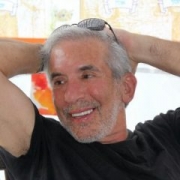 Today’s guest, Michael S. Tobin has spent fifty-one years listening to people’s stories and just as long imagining his own. A clinical psychologist and award-winning author, he began writing at twelve with a three-act play on the Warsaw Ghetto–a child’s attempt to understand courage and loss. His memoir won the Silver Prize in the Nonfiction Book Awards, his novel ‘The Veil’ earned third place in the BookLife Prize, and his essays have been awarded by The Free Press and Letter Review. He writes, he says, “to create characters who live at the edge of beauty and brokenness.”
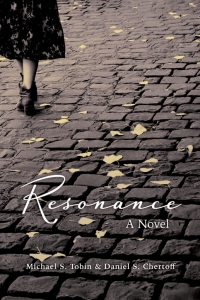
Michael’s new novel written with Daniel S. Chertoff, is ‘Resonance:’ PARIS, 1971′ In the basement of Shakespeare and Company, Sophie Hadad—a restless Wellesley student from Charleston, West Virginia, motherless and adrift—uncovers a forgotten valise. Inside lies the diary of Anna Grinberg, a Jewish sculptor born in Warsaw in 1900, orphaned when her father is murdered in a pogrom and her mother is claimed by the Spanish flu. Learn more at
https://resonanceanovel.com/
You could win one of five copies of ‘Resonance’ that Michel is giving away. To enter the drawing, send an email to caitlin@caitlinhamiltonmarketing.com Please include your shipping address in case you’re a winner.
Welcome to the book club, Michael…
What Happens Next?
At eighty, I have finally begun calling myself a writer. My seventh-grade English teacher might wonder what took me so long. Miss Epstein gave my play a 99 for originality, dialogue, and storyline. She deducted one point for having hundreds of fighters onstage at once.
Before I wrote stories, I read them. Would Dorothy return to Aunt Em? Would Phileas Fogg circle the globe in eighty days and win his bet? I loved not knowing what would happen next. In my own play, I had the considerable advantage of deciding who survived.
 I kept writing, with substantial breaks for sports, the US Army, and business. At twenty-seven, I discovered psychology. As a psychologist, I listened to unfinished stories whose uncertain outcomes I could, to some degree, help shape. Unlike the heroes in my childhood reading, the people sitting across from me did not arrive with endings already written. We worked together to find a way forward.
Then came a story I desperately wanted to rewrite. In 2018, after our trek to Everest Base Camp, my wife, Deborah, was diagnosed with Alzheimer’s disease. I had met her on a dance floor in 1974. She spoke six languages, practiced yoga, and was a brilliant psychologist. I struggled to accept that this was happening to her. Not knowing what happens next is one thing when you are turning the pages of a novel. It is another when you are living it.
Writing cannot change her diagnosis, but it helps me preserve our shared history and make sense of the life we are still living. It gives my grief somewhere to go. It also gives me something to look forward to: a sentence worth keeping, a character worth following, a story not yet finished.
I used to say, “I write.” Now I say, “I’m a writer.” I remain a psychologist, a husband, a father, and a grandfather. Writing has not replaced those identities. It has joined them. It is not a hobby I took up in retirement; I have not retired. It wakes me in the middle of the night with an idea and keeps me at my computer, searching for words that say exactly what I mean.
My hope is to stay around long enough to finish my next novel, the one after that, and the one after. At eighty, I still want to know what happens next.
— Michael S. Tobin
You could win one of five copies Michel is giving away. To enter the drawing, send an email to caitlin@caitlinhamiltonmarketing.com Please include your shipping address in case you’re a winner.
Thanks for reading with me. It’s so good to read with friends.
Suzanne Beecher
Suzanne@DearReader.com